8 Side Hustles for Introverts in the UK
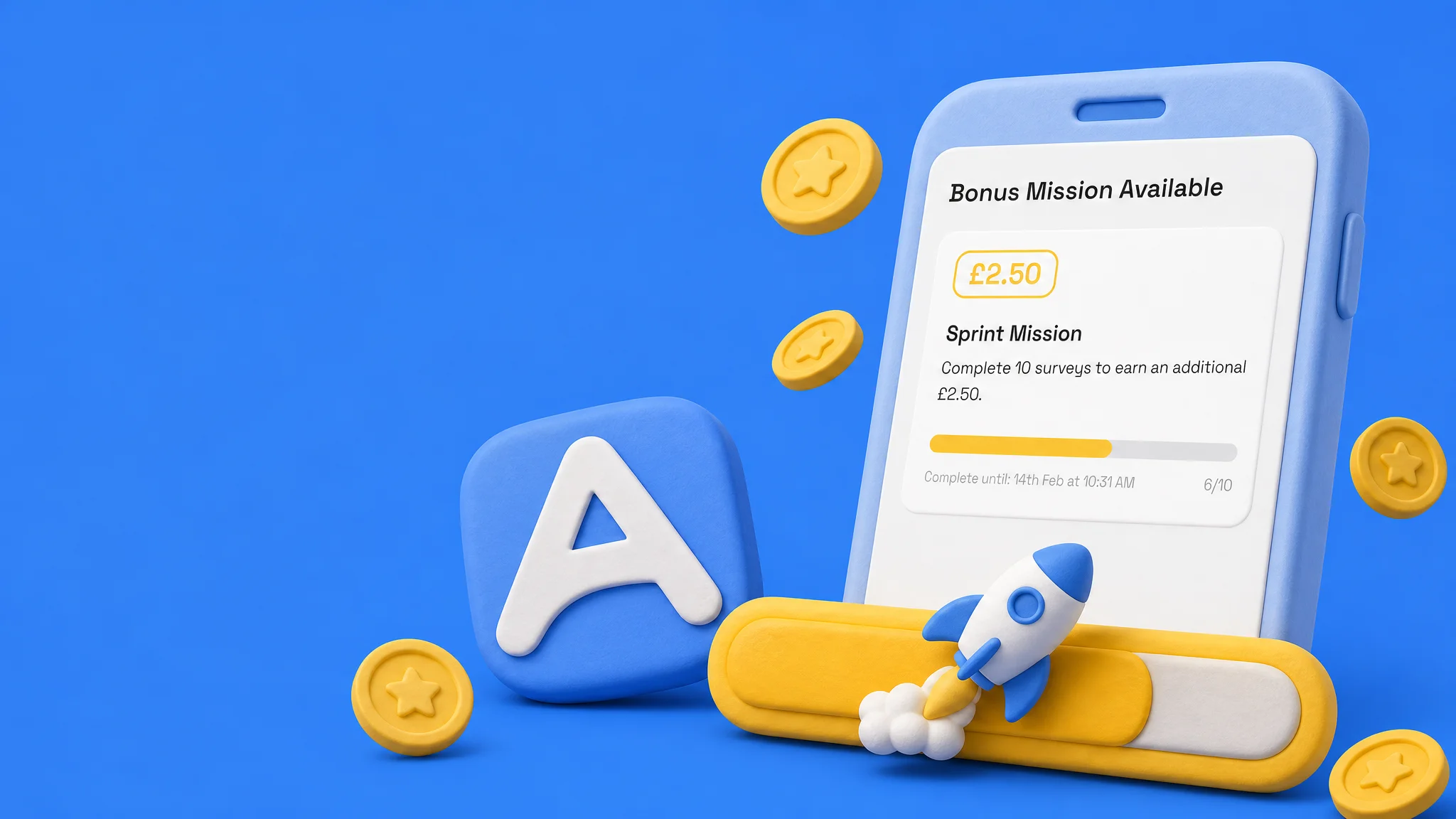
A lot of UK "side hustle" lists assume you're keen to chat to strangers, build a TikTok personality, or wrangle clients on Upwork. If that isn't you, the list shrinks fast — but it doesn't disappear. Below are eight that actually work in the UK, with honest income expectations and the realistic effort each needs. Survey apps like AirPerks sit at the low-effort end — start in your browser at airperks.app, or download the app if you'd rather earn from the sofa.
Real talk: none of these are get-rich shortcuts. They're spare-time income or quiet evening projects. Stack two and the maths starts to look interesting.
What "introvert-friendly" means here
For this list, an introvert-friendly side hustle has at least three of: no real-time conversations, asynchronous contact only (email and chat, on your schedule), solo work at your own pace, and no personal-brand performance (no camera, no selfies). Not every option below hits all four — Rover involves a brief meet-and-greet with the owner — but every one is far less people-facing than the usual list.
1. Paid surveys (lowest friction, fully asynchronous)
The lowest-friction option here. You answer surveys on your phone or laptop in spare moments, get paid per completion, and stack a few small payouts a week into a meaningful cashout.
Realistic income: A few pounds to a few dozen pounds a week, depending on demographic profile and time invested. Some users on AirPerks have earned over £800 across many months.
How to start with AirPerks:
- Sign up. Open the AirPerks web app or install the mobile app — both work, no card required. The starter survey unlocks your first £0.50.
- Build a profile honestly. Surveys re-ask the same screening questions partway through, so honest answers mean fewer screenouts.
- Hit £5 (the standard cashout floor) and redeem to PayPal, UK bank transfer, Amazon, Tesco, Argos or Visa prepaid. Higher-Level loyal users drop the threshold to £3.
Survey Missions, Streaks, Bonus Day (Level 11), Fragments (Level 6) and cashback on payouts all run silently in the background. You don't talk to anyone, ever.
2. Selling stock photography or video
If you already enjoy photography, the upload-once model fits introverts perfectly. Adobe Stock, Shutterstock, Alamy (UK-headquartered) and Pond5 (for video) accept submissions and pay royalties when someone licenses the image.
Realistic income: A small library of 50–100 average photos might bring in £5–£25 a month after the platform takes its cut. Niche libraries built over years can earn considerably more.
How to start: Pick one platform (Alamy and Adobe Stock both have a low bar), submit 20–30 of your best images, and build toward 100+ before judging the income.
3. Print-on-demand T-shirts and posters
Upload a design to Redbubble, Society6 or Printful (via Shopify) and the platform prints and ships when someone orders. You get a royalty per sale. Zero customer contact.
Realistic income: Most print-on-demand shops earn nothing because designs don't surface in search. Shops that find a niche — one specific keyword cluster — can earn a few hundred pounds a month with consistent output.
How to start: Pick a niche before you design. Make 20 designs that all serve that niche. Upload and watch which sell.
4. Selling digital products on Etsy or Gumroad
Notion templates, Lightroom presets, Canva templates, printable planners — sold through Etsy or Gumroad. The work is the design; sales are semi-passive after that.
Realistic income: A successful Etsy printable shop can clear £150–£1,500 a month. Most don't. The ones that do niche down hard and produce 50+ products before they see consistent income.
How to start: Etsy has the lowest friction (built-in audience). Make a niche printable that solves one specific problem you'd buy yourself.
5. Affiliate-driven niche websites
A small website on a topic you genuinely know — UK railway routes, mechanical keyboards, indoor herb gardens — paired with affiliate links to Amazon UK and other retailers. Pure writing work; readers find you via search.
Realistic income: Sites earning meaningful affiliate income usually have 100+ articles and 6+ months of search history. Small sites can quietly earn a few hundred a month. The bar has risen with AI-generated answers in search results.
How to start: Pick a niche you'd happily research for years. Write 30+ articles, link to relevant products, and don't expect Google traffic for at least a few months.
6. Audiobook narration via ACX
Counterintuitive on this list because it involves your voice — but it's solo work. You record alone, edit alone, upload, get notes, repeat. ACX (Audible's marketplace) matches narrators to authors and is open to UK-based narrators.
Realistic income: Narrators starting out often work for royalty share (no upfront, percentage of sales). Building a portfolio takes 3–6 months of unpaid auditioning before steady work.
How to start: A decent USB mic (£80–£150), a quiet room (a wardrobe full of clothes is a surprisingly good booth), and patience.
7. Translation, transcription and proofreading
If you have a second language, Gengo and Smartcat pay per word. Rev and GoTranscript pay per audio minute. Scribbr, Reedsy and Upwork pay per proofreading project.
Realistic income: Transcription typically pays £0.20–£0.80 per audio minute. Translation pays better — £0.04–£0.10 per word for general work. Experienced UK proofreaders can hit £15–£30 an hour.
How to start: Apply to one platform, pass the qualification test, and grind through lower-paying jobs to build a rating.
8. Pet sitting and dog walking via Rover
Rover operates across the UK and lets you book pet sitting, dog walking or boarding with very little real-time human contact. You meet the owner once at handoff, then it's just you and the dog. (TaskRabbit also operates in UK cities if you'd rather do flat-pack assembly or basic handyman jobs — similarly solo once you arrive.)
Realistic income: Highly local. London and other major cities can clear £150–£400 in a busy week.
How to start: Sign up on Rover, build a profile, request reviews from friends with pets, and accept your first booking when it comes.
What didn't make the list
- Driving for Just Eat / Deliveroo / Uber Eats. Constant micro-interactions at handoffs and customer-rating pressure. Not introvert-friendly in practice.
- Tutoring online. Live video with students. The opposite of low-social.
- Selling on eBay or Vinted. Buyers message and negotiate constantly. Plenty of soft conversation.
- Coaching, consulting, freelancing on Upwork. All client-facing.
A simple stacking strategy
- Background layer: AirPerks surveys for a steady £5–£25 a week with zero effort.
- Project layer: One creative side hustle (digital products, photography, niche site) you actually enjoy — slow growth, compounds over months.
The combined maths works because the layers don't compete for the same hours.
Frequently asked questions
Which of these earns the most? Long-term, the niche site or digital products shop has the highest ceiling — but takes the longest. Short-term, surveys pay first.
Do I need to talk to anyone for AirPerks? No. Everything happens in the app or on the web. Support is via in-app chat — instant replies, with real people on the team reviewing complex tickets.
Can I run AirPerks alongside another survey app? Yes. Many people rotate between two or three apps based on which has surveys live.
What's the absolute lowest-effort option here? Paid surveys. You can earn your first £0.50 within five minutes of signing up to AirPerks.
Will I have to declare this to HMRC? You can earn up to £1,000 a year (the trading allowance) before you need to declare. Above that, register for self-assessment.
Start with the easy one
- In your browser: airperks.app
- On your phone: download the AirPerks app
Surveys won't make you rich, but they're the lowest-friction option on this list. Sign up takes a minute. The first £0.50 lands after the starter survey.
Earnings vary based on user activity, demographic profile and survey availability in your region. Top user earnings of £800+ are real but not typical.