How to Invest With Little Money — 8 Honest Options for Beginners
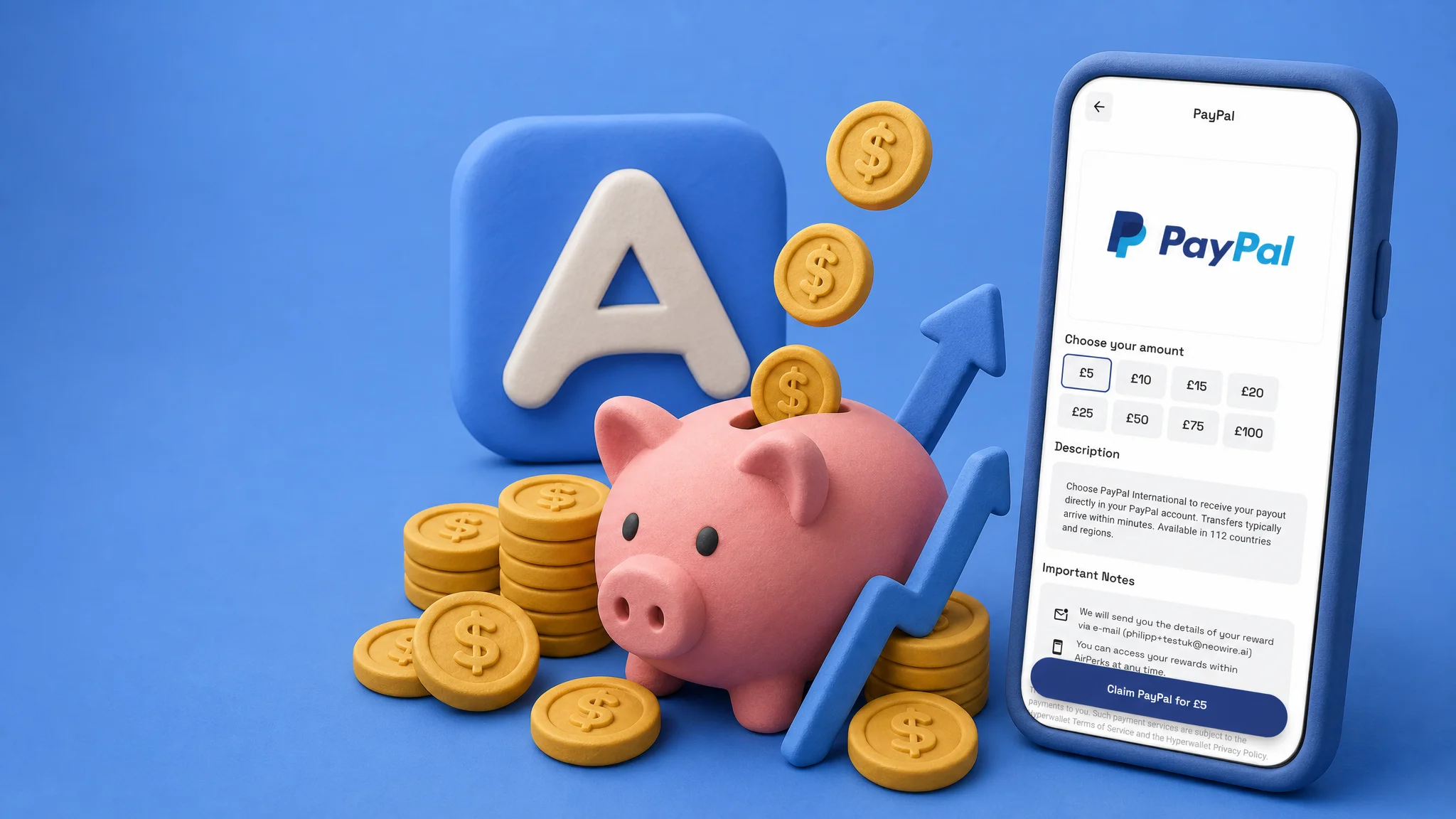
"You need a lot of money to start investing" stopped being true about a decade ago. Fractional shares, robo-advisors, and zero-commission brokerages mean you can begin with a single dollar. The harder question is what to put that dollar into when you're starting from scratch and don't want to lose it on day one. Here's a beginner-friendly map of eight options, ordered from safest to riskiest, with the trade-offs each one makes. Start in your browser at airperks.app, or download the app to fund a starter account with a few dollars from short paid surveys.
This isn't financial advice — every situation is different. It's the honest beginner's tour: what the option is, what it actually costs, and why someone might pick it.
How to fund a starter investment account with AirPerks
The hardest part of starting to invest is finding spare cash to invest. Spare-time earnings are good for this exactly because they weren't already spoken for in your budget.
- Sign up. Open the AirPerks web app or install the mobile app — both work, no credit card required. The starter survey unlocks your first $0.50.
- Run surveys and Survey Missions in spare time. Five-to-fifteen minutes per study, paid per completion.
- Cash out at $5. Standard threshold is $5; loyal users at higher Levels drop to $3. Pick PayPal or bank transfer — zero fees, you keep 100%.
- Move it directly into your brokerage or savings. Don't park it in checking where it'll feel spendable.
How long it takes to build a starter pile
The first $0.50 lands within minutes of signup. The first $5 cashout is realistic in a single focused session. Some users have earned over $1,000 across the platform — real outcomes, not a guarantee. Earnings vary based on your demographic profile, how often you log in, and which surveys are available in your region. For starting an investment account, even $20–$40 a month from spare-time earnings is enough to build a meaningful contribution rhythm.
Pay off high-interest debt first
Quick disclaimer before the list: if you're carrying credit card debt at 20%+ APR, paying it down beats every investment option below in expected return. Investments aspire to 7%–10% annual returns over the long run; high-interest debt is costing you triple that, guaranteed. Knock that out first, then come back.
8 ways to invest with little money
1. High-yield savings account (HYSA)
The safest "investment" of all and a fine first step. Online banks (Ally, Marcus, Wealthfront Cash, several others) offer rates many multiples of brick-and-mortar savings accounts. No minimum at most, no fees, FDIC-insured up to $250,000. Best fit if you don't yet have a starter emergency fund — savings come before investing for a reason.
2. Index funds in a brokerage account
Open an account at a major brokerage (Fidelity, Schwab, Vanguard, several others), put your spare dollars into a broad-market index fund (S&P 500, total US stock market, total world stock market). Most index funds have zero or near-zero minimums, and the expense ratios are often under 0.05%. The biggest factor in long-term investment results is time in the market. The earlier you start, the smaller the contributions can be.
3. A robo-advisor
Betterment, Wealthfront, Schwab Intelligent Portfolios, several others. You answer a few questions about goals and risk tolerance, the service builds a diversified portfolio for you and rebalances it automatically. Fees are usually 0.25%–0.40% annually — slightly more than a DIY index-fund portfolio, but the automation is the value. Best fit if "I'd invest if I didn't have to think about it" describes you.
4. Fractional shares of individual stocks
Robinhood, Fidelity, Schwab, Public, M1. You can buy $1 of a $300 stock. The upside: you own pieces of specific companies you believe in. The downside: picking individual stocks is hard, and most amateur stock-pickers underperform a simple index fund over time. Fine as a small portion of a portfolio, dangerous as the whole portfolio.
5. Real estate crowdfunding
Fundrise, Arrived Homes, several others. You pool money with other investors into property deals — apartment buildings, single-family rentals, commercial real estate. Minimums start around $10–$500 depending on platform. Trade-off: your money is locked up for years (real estate is illiquid), and the returns aren't guaranteed. Reasonable as a small slice of a portfolio once you have a normal index-fund foundation. Don't put your emergency fund here.
6. Cryptocurrency
Coinbase, Kraken, several others. Minimums are often $1–$2. Crypto can deliver huge returns — and huge losses, sometimes 50%+ in a year. The honest version: only invest money you'd be okay losing entirely. Treat it as the most volatile slice of a portfolio, never as your primary holding.
7. Learning a skill
Not "investing" in the financial sense, but the highest-return version of "putting your money to work" for most beginners. A $50 course in a skill you actually use can pay back hundreds of dollars in your first year and thousands over a career. Codecademy, Coursera, Udemy, even free YouTube courses. Hard to put a number on the return but it's usually higher than markets if the skill is the right one.
8. Starting a small business
The highest ceiling and the highest risk-of-return-being-zero on this list. Reselling thrift finds, freelance work, a small e-commerce store, services in your local area. Real businesses have been started with under $100. Real businesses have also failed at $100. Best fit if you have a specific idea and a specific reason to think it'll work — not as "any business idea will do".
Honest trade-off summary
Quick version:
- First-time investing, never lost money: HYSA + index fund. Boring, statistically the best return for most people.
- Want it automated: robo-advisor.
- Have specific company convictions: fractional shares, but keep it under 10% of your total.
- Long horizon, comfortable with illiquidity: real estate crowdfunding for a small slice.
- Money you can afford to lose entirely: crypto, never as the primary holding.
- Highest expected return for a beginner: investing in a skill, full stop.
Index funds aren't exciting, which is exactly why they work — when an investment is boring, you're more likely to leave it alone for the years it takes to compound.
Frequently asked questions
How much do I actually need to start? $1 to $5, at most. Major brokerages offer fractional shares, robo-advisors have zero or low minimums, HYSAs usually have no minimum. The barrier isn't the dollar amount; it's the habit of contributing regularly.
What's the absolute simplest place to start? A target-date retirement fund inside a Roth IRA, if you qualify. The fund picks the right mix for your retirement age and rebalances it automatically. Set up auto-contribution, and you're done. Boring on purpose.
How does AirPerks fit into this? AirPerks earnings are a way to fund a starter pile without touching paycheck money. Cash out via PayPal or bank transfer (zero fees), then transfer to your brokerage or savings. Treat it as a small but real addition.
Should I invest if I have student loans? Depends on the interest rate. If it's federal at 4%–6%, most people invest at least minimally and pay down the loan on its schedule. If it's private at 8%+, paying off the loan is usually higher-return than investing in markets. The math is comparing the loan rate to your expected investment return.
Is "investing $5 a week" really worth it? Compounded over decades, yes — surprisingly so. The bigger benefit is the habit. The hardest thing about investing is starting; once you're contributing regularly, scaling up later is easy. The hardest dollar to invest is the first one.
Do I have to pay tax on AirPerks earnings I invest? Earnings from AirPerks are taxable miscellaneous income in most jurisdictions, regardless of what you do with the money afterward. Keep records of your cashouts. If it grows large enough to matter, talk to a tax professional.
Start funding your starter pile
- In your browser: airperks.app →
- On your phone: download the AirPerks app →
A minute to sign up. The first $0.50 lands after the starter survey, and after that the cadence is yours.
Earnings vary based on user activity, demographic profile, and survey availability in your region. Top user earnings of $1,000+ are real but not typical. This article is general information, not financial or tax advice.